A glass balustrade on the IJ waterfront: wind, views and upkeep
If you moved to the IJ for the view, a glass balustrade keeps that view in front of you. Open water also brings more wind than a sheltered city street, which affects the glass, the fixings and how you look after it.
Request a quoteCall +31 36 84 54 240
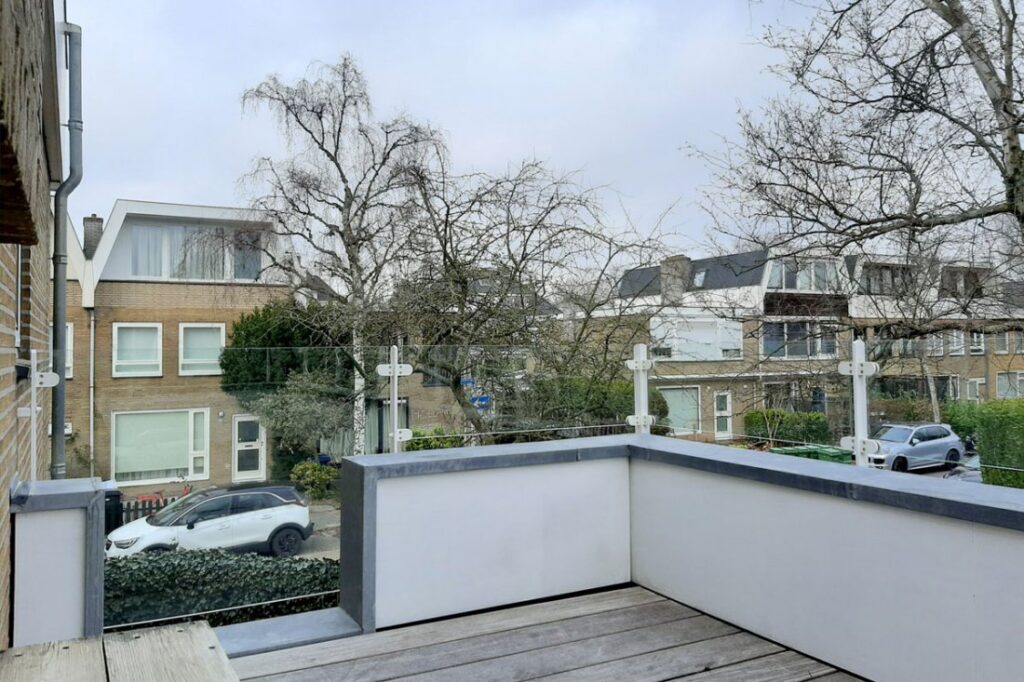
Waterfront living in Amsterdam
The banks of the IJ, the broad river-like waterway behind Central Station, have changed enormously. IJburg and Zeeburgereiland in the east, Buiksloterham and other parts of Noord across the water, and the Houthavens in the west are full of newer apartment buildings whose balconies and roof terraces look straight out over the water. It makes sense that many residents want glass. Bars or solid panels cut into the view. Glass leaves most of it intact.
The setting is not the same as a canal street in the Jordaan, though. There are no buildings opposite to break the wind, and on upper floors and roof terraces you feel that even more.
- Glass
- Laminated and toughened, e.g. 44.2/55.2/66.2
- Fixing
- Clamps or base channel
- Height
- Min. 100 cm
- Lead time
- 6-8 weeks (Jul-Sep 8-10)
What wind does to glass
A bar railing lets most of the wind pass through. A glass panel catches all of it, and that load has to travel through the fixings into the balcony floor or edge. The higher up you live and the more exposed the spot, the more that matters.
There is an upside. The same glass that takes the wind also shelters you from it. A balcony that was too blustery to enjoy can become a much more pleasant place to sit. If you want extra shelter on one side, a privacy screen is worth a look. Roof terraces have a few extra considerations, which we cover in our article on roof terraces in Amsterdam.
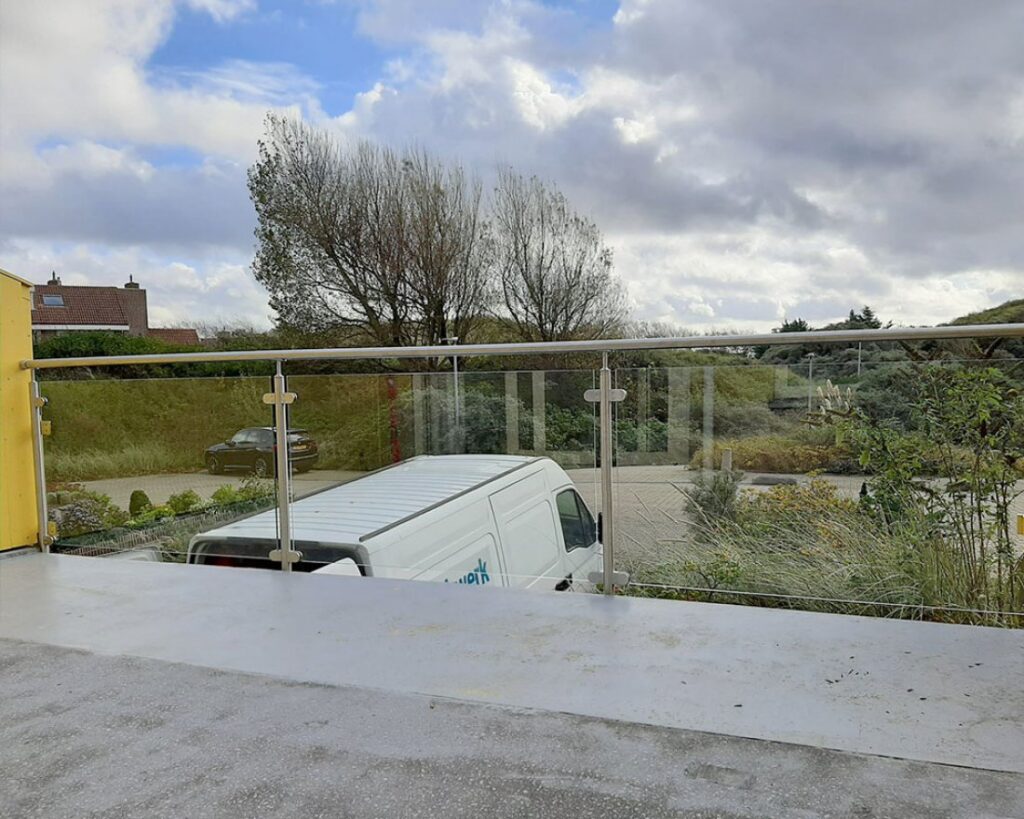
Laminated and toughened glass explained
Balustrades use laminated glass: two sheets bonded with an interlayer film. If the glass breaks, the pieces stay stuck to the film and the barrier remains in place. The glass is often toughened as well for extra strength. You will see codes such as 44.2, 55.2 or 66.2. The first two digits are the thickness of each sheet in millimetres, and the last digit is the number of film layers.
Which build-up your balcony needs depends on the height, the width of each panel, the fixing method and the location. It is not something to pick from a menu in advance. We decide it when we measure up, once we have seen the spot, and it is shown on the production drawing we give you.
Posts and clamps, or a base channel
There are two main ways to hold the glass.
- Posts with glass clamps. The panels sit between posts and are held by clamps. Our G01 uses steel posts, G02 brushed stainless steel with clamps, G04 flat steel posts and G10 slim steel posts. You see the posts, but the overall look stays light.
- A base channel. The glass stands in a continuous profile fixed to or against the floor, as with our G03 in stainless steel. No posts, so the view is as open as it gets. The floor or edge does have to be able to carry that profile securely.
Which option is sensible on an exposed waterfront depends on the floor, the balcony edge and the height. Again, that is a structural decision we make on site. See the models on our glass balustrade Amsterdam page, or browse the wider range of glass balustrades at hekwerkwebshop.nl.
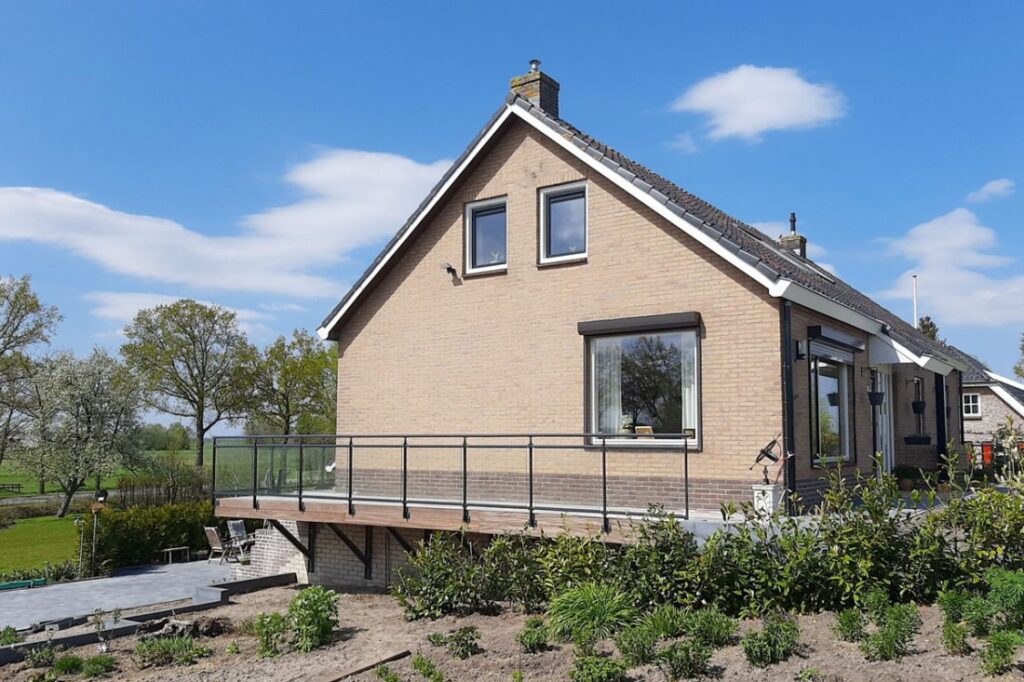
Keeping it clean
Glass by the water gets dirty. Rain, blown dust, birds and spray all leave marks. Expect to clean your balustrade regularly, much as you would your windows. Lukewarm water with a mild soap and a soft cloth or squeegee does the job. Avoid scouring pads and abrasive cleaners, as they can scratch.
Clean the posts, clamps or base channel too, since that is where grime collects. Every now and then, check that everything is still firmly in place. How often you need to clean depends entirely on your floor and exposure, so we will not pretend to give you a schedule.
Measuring up and installation
Many newer waterfront buildings have a VvE, the Dutch homeowners’ association that manages shared parts of the building. If several balconies are involved, read our guide to replacing balcony railings with your VvE. If the building is listed or in a protected area, check with the City of Amsterdam. We do not give advice on permits.
We are in Amsterdam daily with our own drivers and installers, so the glass is delivered and fitted by the same company that made the steelwork. Quotes are free and without obligation. Send rough measurements and photos, and we aim to reply with an indicative quote within one or two working days. If you want us to install, we come to measure and send a final quote with a drawing. Price depends on length, height, model, glass, finish, fixing method and access. Standard lead time is 6 to 8 weeks, or 8 to 10 weeks from July to September. Request your quote or call 036 84 54 240.
Frequently asked questions
Is glass a good idea on a windy waterfront balcony?
Yes, as long as the glass thickness and fixing suit the location. We work that out when we measure up, based on height, panel width and the floor.
What does 55.2 mean?
Two 5 mm sheets of glass with two layers of film between them. If the glass breaks, the fragments stay attached to the film.
How should I clean a glass balustrade?
Use lukewarm water, a mild soap and a soft cloth or squeegee. Avoid abrasive cleaners and scouring pads.
Tell us what you have in mind
Send a few photos and rough measurements. You will have an indication within one or two working days, free of charge.